Beyond the Video Call: How Metaverse Work Environments Are Redefining What It Means to Be a Remote Employee

Four years after remote work became the dominant employment arrangement for a significant portion of the American technology workforce, the structural limitations of that model are increasingly difficult to ignore. Video conferencing fatigue is well-documented. The informal social architecture of office life — the hallway conversation, the spontaneous whiteboard session, the ambient awareness of colleagues — has never been convincingly replicated by a grid of floating faces on a screen. Engagement metrics at many distributed companies have plateaued or declined, and culture-building remains one of the most persistent challenges facing remote-first organizations.
Into this context, immersive metaverse work environments are arriving not as a novelty but as a serious organizational proposition — one that is beginning to reshape how forward-thinking companies think about culture, collaboration, and the fundamental nature of distributed work.
What Metaverse Workplaces Actually Look Like in Practice
It is worth establishing what we mean when we discuss metaverse work environments in an enterprise context, because the concept frequently generates more speculation than clarity.
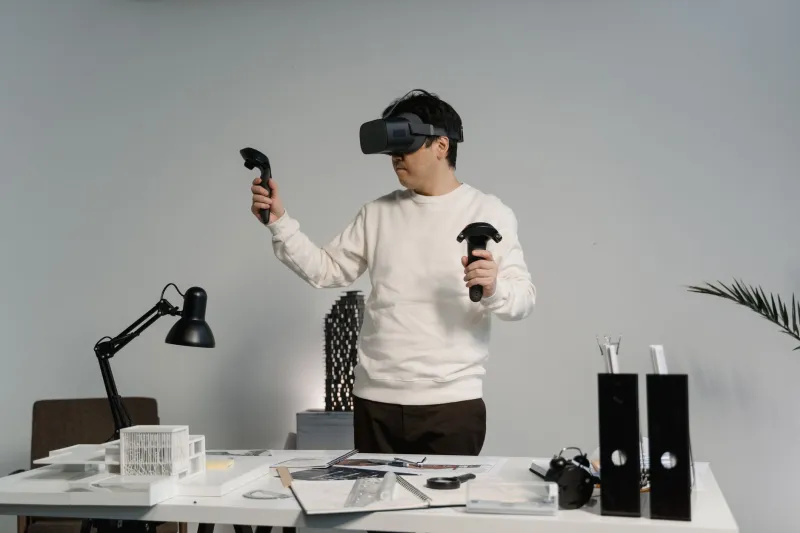
In practical terms, companies deploying immersive work platforms are creating persistent three-dimensional virtual spaces — accessible via VR headsets, augmented reality devices, or conventional desktop interfaces — where employees can move through shared environments, gather around virtual conference tables, co-create on spatial whiteboards, and maintain the kind of ambient presence that flat communication tools fundamentally cannot provide. Platforms such as Horizon Workrooms, Spatial, and Microsoft Mesh represent the current generation of these tools, with a second generation of more sophisticated environments already in development.
Early adopters in the US technology sector — including companies in enterprise software, defense contracting, and immersive media production — have begun using these environments not to replace all communication but to supplement it in specific, high-value contexts: complex collaborative design sessions, onboarding experiences for new hires, leadership summits, and team-building activities that suffer most acutely in a flat-screen format.
The reported outcomes, while still preliminary, are notable. Several companies piloting persistent virtual offices have described measurable improvements in cross-functional collaboration and a reduction in the social isolation that remote employees frequently report during engagement surveys. When people can walk their avatar across a virtual floor to tap a colleague on the shoulder — metaphorically speaking — something qualitatively different happens compared to composing a Slack message and waiting for a response.
The Genuine Promise: Collaboration, Presence, and Culture at a Distance
The most compelling argument for metaverse work environments is not technological — it is human. Remote work, for all its logistical advantages, has consistently struggled to reproduce the sense of shared presence that drives spontaneous collaboration and strengthens organizational culture. This is not a failure of tools; it is a fundamental constraint of two-dimensional communication.
Immersive environments address this constraint directly. Spatial audio, which allows sound to behave as it does in physical space — becoming quieter as distance increases, allowing side conversations to happen naturally — creates meeting dynamics that are meaningfully closer to in-person interaction than anything a video call can approximate. Avatar-based presence enables nonverbal communication, spatial positioning, and the kind of informal social signaling that humans rely on to build trust and rapport.
For companies with distributed teams spanning multiple US time zones — a common reality in the technology sector — the ability to create a shared spatial context, even asynchronously, represents a genuine organizational advantage. A persistent virtual headquarters that employees can enter and exit throughout their workday maintains a form of cultural continuity that remote work has struggled to sustain.
From a talent acquisition perspective, this matters significantly. Companies that can credibly offer a rich, cohesive remote work culture — rather than the attenuated version that most distributed organizations currently provide — gain a meaningful edge in attracting professionals who prioritize both flexibility and connection. As competition for metaverse-skilled talent intensifies, the quality of the virtual work environment itself becomes a recruitment differentiator.
The Real Challenges: Access, Equity, and the Hardware Divide
An honest assessment of metaverse workplace adoption must contend with the substantial barriers that currently limit its reach and complicate its promise of inclusivity.
The most immediate challenge is hardware. High-quality VR headsets capable of delivering genuinely immersive professional experiences remain expensive — a meaningful financial barrier for employees who are expected to outfit their home offices with company-grade equipment. While enterprise procurement programs can mitigate this cost for established companies, smaller organizations and early-stage startups face real constraints. Desktop-accessible versions of metaverse platforms reduce the hardware barrier but also reduce the immersive quality that generates the collaboration benefits in the first place.
Physical accessibility presents a related concern. VR environments, in their current form, can be exclusionary for employees with certain disabilities, including those affecting vision, vestibular function, or mobility. As companies build culture and conduct business within these spaces, ensuring that participation is genuinely equitable — not merely technically optional — requires deliberate design investment that many organizations have not yet made.
Bandwidth and connectivity disparities across the United States also deserve attention. The immersive, real-time nature of metaverse environments places significant demands on internet infrastructure. Employees in rural areas or regions with limited broadband access may find themselves effectively excluded from participation, creating a new dimension of workplace inequity layered atop the existing digital divide.
How This Reshapes Hiring and Compensation in the Coming Years
The implications of metaverse workplace adoption for hiring practices and compensation structures are beginning to come into focus, and they are more significant than many organizations currently anticipate.
As immersive work environments become more prevalent, the skills required to function effectively within them — and to design, manage, and optimize them — will increasingly appear in job descriptions across roles that are not explicitly technical. HR professionals, culture leads, and internal communications specialists will need to develop fluency in virtual environment management. Middle managers will require new competencies around facilitating collaboration and maintaining team cohesion in spatial digital contexts.
Compensation structures are also likely to evolve. Companies that invest in high-quality metaverse work infrastructure may adjust their remote work stipend frameworks to include hardware and connectivity support, effectively increasing total compensation for distributed employees. Conversely, organizations that leverage metaverse environments to create genuinely premium remote work experiences may find that geographic pay adjustments — which some companies implemented during the post-pandemic remote work normalization — become harder to justify when the quality of the work environment is location-independent.
From a recruitment standpoint, the metaverse workplace represents both a tool and a differentiator. Companies that use immersive environments in their candidate experience — virtual office tours, spatial interview formats, onboarding simulations — signal a level of technological sophistication that resonates with the tech-forward professionals they are most eager to attract.
A Measured Outlook
The metaverse workplace is not a finished product, and it would be premature to suggest that immersive virtual environments will displace conventional remote work models within any near-term horizon. The technology is maturing, the equity challenges are real, and organizational change at this scale is inherently gradual.
What is clear, however, is that the directional shift is underway. The companies investing in this space today — building the internal expertise, the cultural frameworks, and the technical infrastructure to operate effectively within immersive virtual environments — are positioning themselves ahead of a transition that will eventually affect the entire distributed workforce.
For professionals navigating this landscape, the implication is straightforward: fluency with metaverse work tools and environments is becoming a meaningful professional asset, independent of whether your role is explicitly technical. The future of remote work is not another video call. It is something considerably more dimensional — and the professionals and organizations that engage with it seriously, and thoughtfully, will be best positioned to shape what it becomes.
At RecruitsMetaCareers, we are committed to tracking this evolution as it unfolds — connecting the professionals building the metaverse workplace with the companies reimagining what work can be.